

What Makes a Hydrogen Peroxide Vapor Decontamination System Effective?
Understanding the Role of H₂O₂ Concentration, Vaporization Technology, and Treatment Volume in Pharmaceutical and Controlled Environments
Hydrogen peroxide vapor (VHP) has become an established technology for environmental decontamination in pharmaceutical manufacturing, cleanrooms, laboratories, isolators, and other controlled environments. Its application is not simply a matter of introducing hydrogen peroxide into a room. Achieving a reliable and repeatable decontamination process requires careful consideration of several interconnected factors.
Among them, hydrogen peroxide concentration, vaporization and distribution, and treatment volume deserve particular attention.
A system designed for effective decontamination must do more than generate vapor. It needs to deliver the appropriate process conditions throughout the target space, achieve the required microbial reduction, and remain compatible with the environment and materials being treated.
At NaxSafe, these considerations are reflected in the design approach behind the NAX-SVHP hydrogen peroxide vapor decontamination system: Less. Smaller. Farther.
1. Hydrogen Peroxide Concentration: Balancing Microbial Efficacy and Material Compatibility
Hydrogen peroxide concentration is one of the most visible parameters in a VHP process. However, a higher concentration does not automatically mean a better decontamination process.
The actual outcome depends on the interaction of multiple process variables, including hydrogen peroxide concentration, exposure time, temperature, relative humidity, air circulation, and the characteristics of the treatment space.
These factors influence how hydrogen peroxide vapor is generated, distributed, and maintained during a decontamination cycle. They also affect the potential for condensation and the compatibility of materials exposed to the process.

For pharmaceutical facilities, this creates a practical consideration: how can the required microbial efficacy be achieved while managing the potential impact on equipment, surface finishes, electronic components, and other sensitive materials?
A well-designed VHP process should therefore be evaluated through its validated performance under defined conditions, rather than concentration alone.
NAX-SVHP: Validated Performance with H₂O₂ Below 8%
The NAX-SVHP system is designed to operate with hydrogen peroxide concentrations below 8%, while supporting validated Log 6 sporicidal efficacy under specified process conditions.
This approach aims to reduce the hydrogen peroxide concentration required by the process and help manage potential corrosive impact on sensitive materials, including color-coated steel panels and precision instruments.
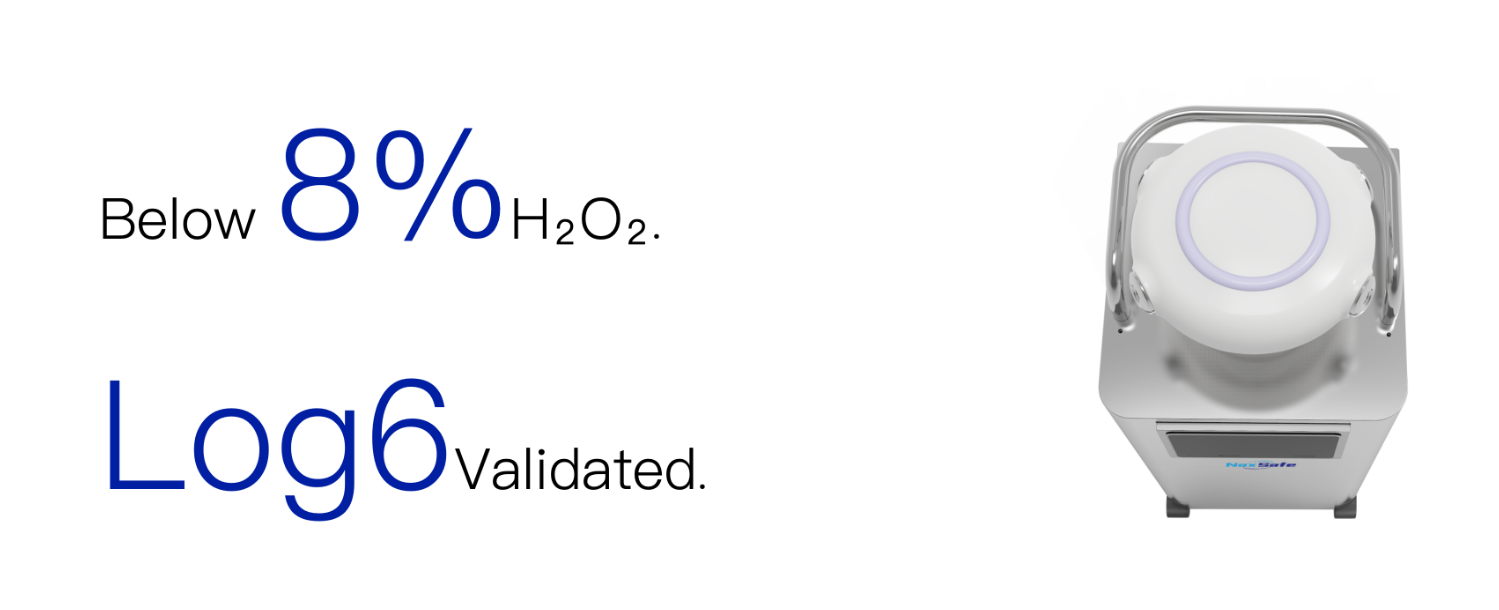
The system also incorporates concentration monitoring and control functions. Based on preset concentration limits and the configured control logic, hydrogen peroxide output can be adjusted to support process consistency and reduce the need for manual intervention.
The objective is not simply to use less hydrogen peroxide, but to achieve the required decontamination performance through a controlled and validated process.
2. Vaporization and Distribution: Why the Way Vapor Is Generated Matters
Generating hydrogen peroxide vapor is only the beginning of the process. The vapor must also be distributed throughout the target enclosure and reach relevant surfaces.
In practice, distribution can be affected by room geometry, equipment arrangement, airflow patterns, temperature, relative humidity, and the presence of obstacles or difficult-to-access areas.
For example, a large cleanroom with multiple pieces of equipment may present different distribution challenges from a relatively simple, empty enclosure. Areas behind equipment, corners, enclosed structures, and locations with limited airflow may require particular attention during process design and validation.
This is why vaporization technology should not be evaluated only by its ability to produce vapor. The characteristics of the generated vapor and how it moves through the treatment space are also important.
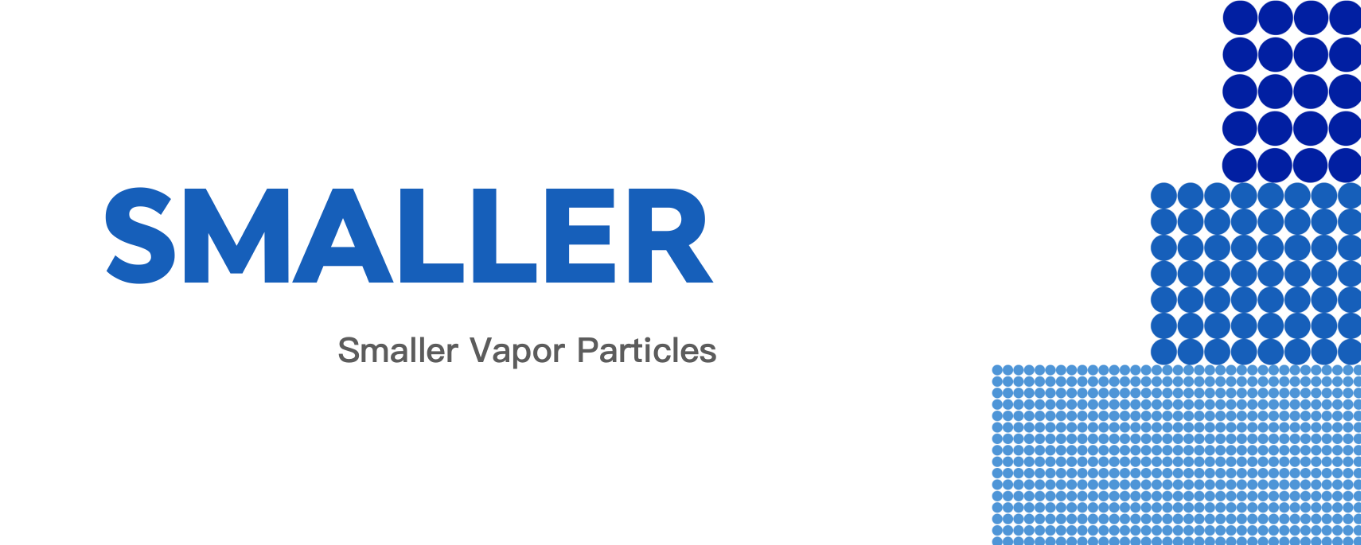
A controlled vaporization process, combined with appropriate airflow and process monitoring, can help improve distribution and support more consistent treatment conditions.
NAX-SVHP: 3rd-Generation+ Intelligent Vaporization Technology
NAX-SVHP incorporates NaxSafe's 3rd-Generation+ Intelligent Vaporization Technology, featuring a Multi-Chamber Tower vaporization design.
The design is intended to support finer vapor generation and promote distribution throughout the treatment space.
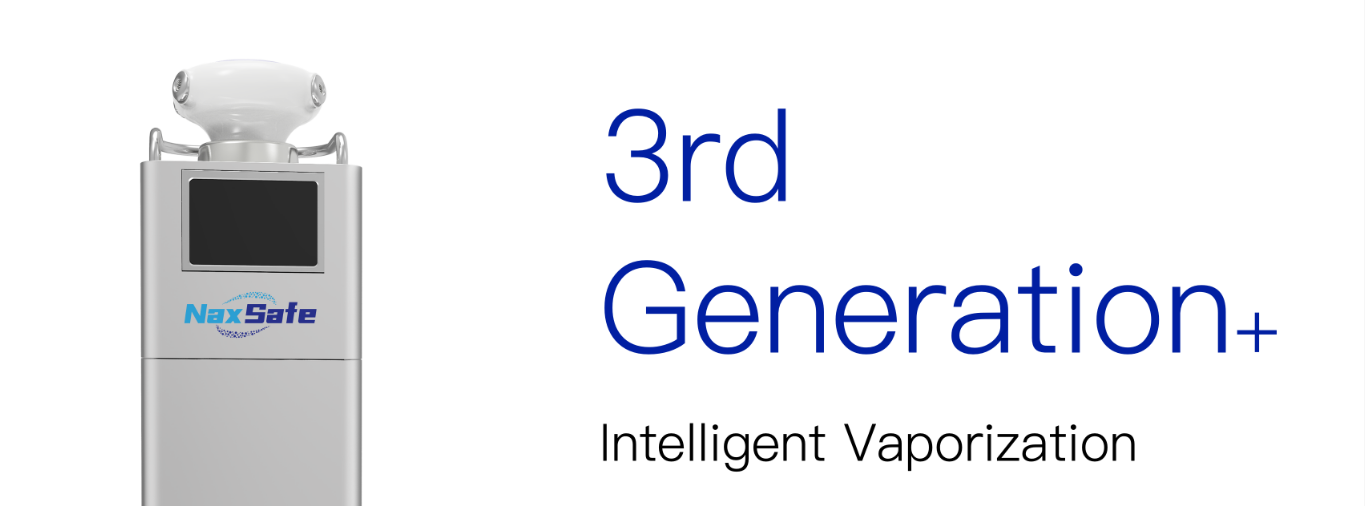
The concept behind SMALLER is to focus on the characteristics of vapor generation, rather than simply increasing the amount of hydrogen peroxide introduced into the environment.
In actual applications, however, vapor distribution is influenced by the entire treatment environment. Equipment layout, airflow, temperature, humidity, and process parameters must all be considered. Distribution performance should be confirmed through appropriate process studies and validation.
3. Treatment Volume: Looking Beyond the Equipment's Rated Capacity
When selecting a VHP system for a pharmaceutical facility or cleanroom, treatment volume is often one of the first specifications considered.
A system intended for a small isolator or pass-through chamber has different requirements from one designed for a large production room or multiple connected spaces.
However, the stated treatment volume should not be interpreted as a guarantee of identical decontamination performance in every environment.
Room configuration, surface area, equipment loading, airflow, environmental conditions, and the required microbial reduction all influence the design and validation of a decontamination cycle.

For larger treatment spaces, sufficient vapor output and an appropriate distribution strategy are important considerations. The system must be selected and configured according to the actual enclosure and process requirements.
NAX-SVHP: Designed for Treatment Volumes of 500–1,000 m³
The NAX-SVHP series is designed to support large-volume environmental decontamination applications, with treatment volumes of approximately 500–1,000 m³ depending on system configuration and process conditions.
This makes it suitable for consideration in larger controlled environments where treatment coverage, process control, and repeatability are important.
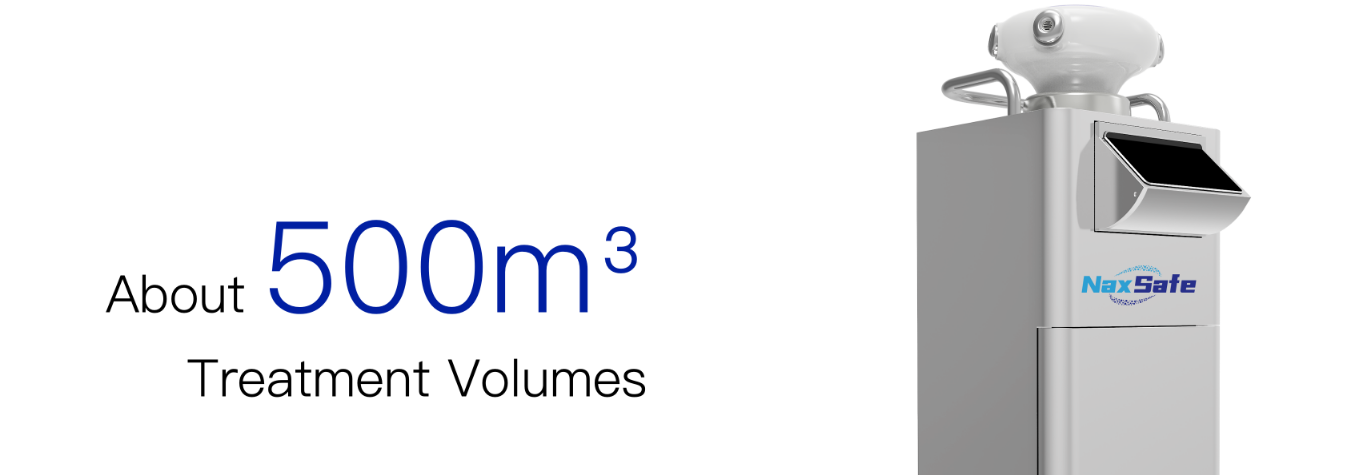
The FARTHER concept represents the system's focus on extending its application to larger treatment spaces. Actual performance should always be assessed and confirmed for the specific facility, configuration, and decontamination cycle.
4. What Should Be Considered When Selecting a VHP Decontamination System?
Beyond individual equipment specifications, selecting an appropriate VHP system requires an understanding of the intended application.
The following factors are useful starting points for project evaluation:
1. Treatment Space and Volume
Define the room or enclosure dimensions, layout, connected spaces, and equipment loading. The effective treatment volume should reflect the actual application rather than room volume alone.
2. Microbial Efficacy Requirements
Identify the target microorganisms and the required level of microbial reduction. Biological indicators and appropriate validation studies are important for demonstrating process effectiveness under defined conditions.
3. Material Compatibility
Consider the materials, surface finishes, electronic components, and equipment exposed to hydrogen peroxide. Repeated exposure and process conditions should be considered when evaluating compatibility.
4. Vapor Distribution and Environmental Conditions
Assess airflow, temperature, relative humidity, room geometry, and potential areas with limited vapor access. These factors can influence the consistency of the decontamination process.
5. Monitoring, Control, and Validation
Determine which process parameters need to be monitored, how alarms and control functions operate, and what records are required. Monitoring data can support process review and validation, but it does not replace biological efficacy testing or a complete validation strategy.
A VHP system should ultimately be selected according to the facility's process requirements, not just one specification on a product brochure.
5. NaxSafe NAX-SVHP: Bringing Three Design Considerations Together
The development approach behind NAX-SVHP can be summarized in three words:
LESS. SMALLER. FARTHER.
LESS: Hydrogen peroxide concentration below 8%, supporting validated Log 6 sporicidal efficacy under specified conditions.
SMALLER: 3rd-Generation+ Intelligent Vaporization Technology with a Multi-Chamber Tower design, developed to support finer vapor generation and distribution.
FARTHER: Designed for larger treatment volumes of approximately 500–1,000 m³, depending on configuration and process conditions.
These three considerations address different aspects of hydrogen peroxide vapor decontamination: the concentration used, the way vapor is generated and distributed, and the scale of the treatment space.
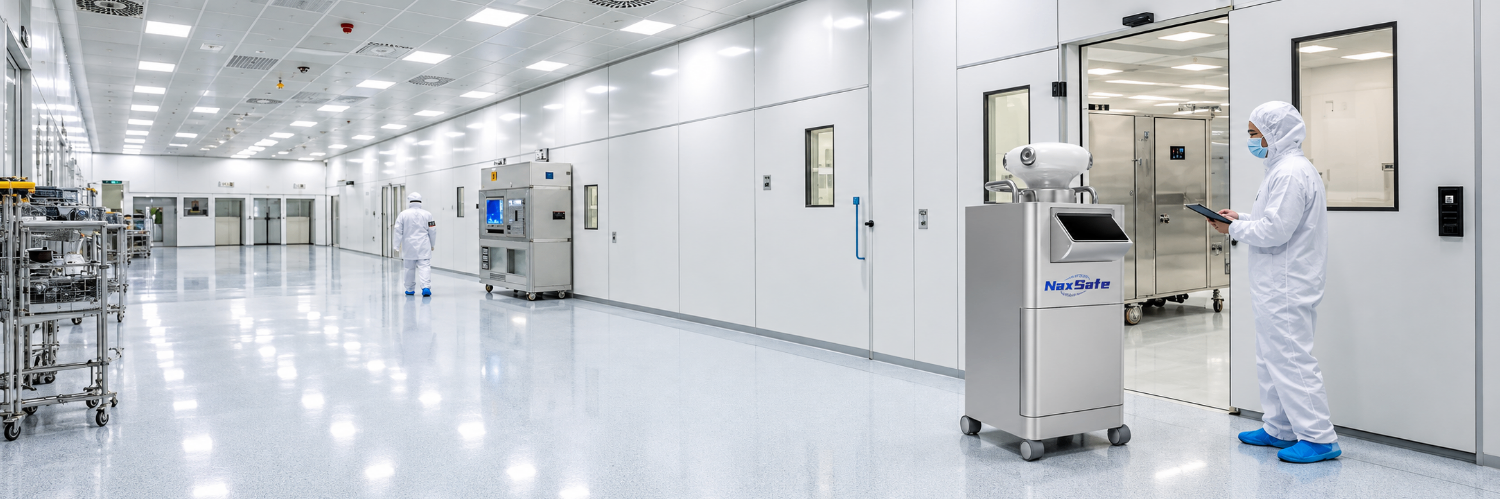
For pharmaceutical manufacturers, cleanroom operators, and contamination control professionals, the right solution is ultimately the one that can be configured, monitored, and validated for the actual application.
NaxSafe continues to develop hydrogen peroxide-based decontamination technologies with a focus on practical application requirements across pharmaceutical manufacturing and other controlled environments.
NaxSafe – Deliver Value By Disinfection.

Frequently Asked Questions
-
Does a higher hydrogen peroxide concentration always provide better decontamination?
Not necessarily. Decontamination performance depends on several interacting process variables, including concentration, exposure time, temperature, relative humidity, vapor distribution, and the characteristics of the treatment space. The required efficacy should be demonstrated through validation under defined conditions.
-
Why is vapor distribution important in VHP decontamination?
Hydrogen peroxide vapor needs to reach the relevant surfaces within the target enclosure. Room geometry, equipment arrangement, airflow, temperature, and humidity can all influence distribution. Appropriate process design and validation help assess whether the required treatment conditions are achieved throughout the space.
-
What treatment volume can the NAX-SVHP system support?
The NAX-SVHP series is designed for treatment volumes of approximately 500–1,000 m³, depending on system configuration and process conditions. The appropriate configuration should be evaluated against the actual facility layout and validation requirements.
-
Is a VHP system suitable for every cleanroom or pharmaceutical facility?
Not automatically. Suitability depends on the application, room configuration, HVAC and airflow conditions, material compatibility, microbial efficacy requirements, and the facility's operational and validation needs. A project-specific assessment is recommended before selecting a system.