

Mold Contamination Control in Pharmaceutical Cleanrooms: A Risk-Based Strategy Under EU GMP Annex 1
Technical Insights | Aseptic Manufacturing
Mold contamination in pharmaceutical cleanrooms requires more than routine surface disinfection. Fungal contamination can enter through personnel, materials, equipment and air-handling systems, while moisture and poorly controlled niches may allow localized growth. A reliable control strategy combines environmental monitoring, effective cleaning, validated disinfectant use and a risk-based approach to room decontamination.
EU GMP Annex 1 provides a framework for contamination control through the site's Contamination Control Strategy (CCS), including the management and validation of disinfection processes. This article examines common routes of fungal contamination and explains how routine disinfection, sporicidal treatment and vaporized hydrogen peroxide (VHP) decontamination can contribute to a coordinated control strategy.
1. Why Mold Requires Specific Attention
Mold contamination presents challenges that cannot be addressed by relying on routine disinfection alone.
Fungal spores may be more resistant than vegetative microorganisms. The effectiveness of a disinfectant depends on the target organism, formulation, concentration, contact time and conditions of use. Alcohol-based agents are widely used for routine surface disinfection, but they are not reliable sporicidal agents. The FDA's guidance on aseptic processing therefore recommends including a sporicidal agent in a sound disinfection program, used according to a written schedule and when environmental data indicate the presence of spore-forming organisms.
Fungal contamination can spread through air and material movement. Spores may be introduced from personnel, incoming materials, equipment and the surrounding environment. Once established, localized growth may develop in areas where moisture, residues or inadequate cleaning create favorable conditions.
Monitoring results require interpretation, not just counting. A single environmental monitoring result rarely explains the source or significance of a fungal finding. Identification, location, historical trends and operational context all help determine whether the result reflects an isolated event, a recurring contamination route or a potential reservoir.
The practical implication is clear: mold control should combine preventive measures with investigation and corrective action, rather than depend on repeated surface disinfection alone.
2. Where Fungal Contamination Can Enter or Persist
A useful investigation starts with three areas of focus.
HVAC systems and the facility environment
Outdoor air and the surrounding environment can introduce fungal spores. Filter integrity, maintenance practices, pressure differentials and air-handling performance should be assessed when investigating contamination patterns.
Moisture deserves particular attention. Condensation, leaks and persistently damp surfaces can create conditions favorable to fungal growth. HVAC systems should therefore be evaluated not only for airflow and filtration performance, but also for moisture management and maintenance effectiveness.
Personnel and operational practices
Personnel can transfer microorganisms through garments, gloves and contact with surfaces or materials. Gowning procedures, hand hygiene, glove disinfection and movement between areas should be reviewed in the context of the site's contamination risks.
The investigation should focus on actual practices and documented evidence rather than assume that personnel are always the dominant source of contamination.
Materials, equipment and transfer processes
Incoming materials, tools, carts and portable equipment can introduce contamination if transfer procedures are inadequate. Annex 1 addresses material transfer into cleanrooms and critical areas, emphasizing appropriate transfer controls and sterilization where required or justified.
Transfer procedures should be assessed according to the cleanliness requirements of the receiving area, the nature of the item and its intended use. Disinfection alone should not be assumed to provide the required level of control for every material or application.
The objective is to identify how contamination entered, where it may persist and which control measures need improvement.
3. Environmental Monitoring Within the Contamination Control Strategy
Environmental monitoring provides evidence of the microbiological state of a facility. Under the Annex 1 approach, it should support the site's overall CCS rather than function as an isolated pass-or-fail exercise.
Three practices are particularly useful when investigating fungal contamination.
Identify and investigate recovered organisms. Where appropriate, identification to genus or species can help distinguish potential contamination routes and guide follow-up investigations. The significance of an isolate depends on its identity, location, frequency and relationship to the manufacturing process.
Review trends alongside individual results. Repeated recoveries, changes in the types of organisms detected and patterns across locations may reveal developing problems even when individual results remain within established limits. Trend interpretation should follow the site's procedures and risk assessment.
Evaluate disinfectant effectiveness against relevant microorganisms. Annex 1 calls for the effectiveness of the disinfection program to be assessed and for changes in microbial flora to be considered. Site-relevant microorganisms may therefore be included in an appropriate efficacy evaluation, using scientifically justified methods and acceptance criteria.
Environmental monitoring does not replace investigation or corrective action. When fungal contamination is detected, the response should consider the organism, location, potential source, product and process risks, and the possibility of recurrence.
4. A Layered Approach to Mold Control
A practical strategy can combine routine cleaning and disinfection, periodic sporicidal treatment, and room-scale decontamination where justified by risk assessment. These measures serve different purposes and should not be treated as interchangeable.
Layer 1: Routine cleaning and disinfection
Routine cleaning removes soil and residues that may interfere with disinfection. A suitable disinfectant is then applied according to the established procedure, including the specified concentration, application method and contact time.
Alcohol-based agents, such as 70% isopropyl alcohol, are commonly used for routine surface disinfection. However, alcohol should not be relied upon as the sporicidal component of a cleanroom disinfection program.
The appropriate routine agent and frequency depend on the surface, the microorganisms of concern, the manufacturing activity and the site's validated procedures. Cleaning and disinfection must work together: applying a disinfectant to an inadequately cleaned surface may compromise the intended outcome.
Layer 2: Periodic sporicidal treatment
EU GMP Annex 1 Section 4.33 calls for cleanrooms to be disinfected in accordance with a written program using more than one disinfectant with different modes of action, and for a sporicidal agent to be used periodically. Section 4.34 addresses the validation of disinfection processes, while Section 4.35 requires disinfectants and detergents used in Grade A and B areas to be sterile before use.
A hydrogen peroxide-based sporicidal formulation may be suitable for this layer when its efficacy, compatibility and conditions of use have been established. The choice of formulation should reflect the target microorganisms, relevant surfaces, required contact time and the site's quality requirements.
Some formulations combine hydrogen peroxide with other active ingredients. Their suitability should be assessed using formulation-specific efficacy data rather than inferred from the presence of multiple ingredients alone.
A defensible program should define the treatment frequency in written procedures, establish appropriate contact times and evaluate effectiveness under relevant conditions. Where required, testing should address representative surface materials and microorganisms relevant to the facility.
For Grade A and B applications, the sterility status of the product at the point of use must also be addressed. Product documentation and supplier qualification should support the site's assessment.
Layer 3: Room-scale decontamination when justified
Surface disinfection is limited to areas that can be reached and treated effectively. Vaporized hydrogen peroxide (VHP) may provide an additional decontamination option for defined spaces and equipment configurations, including locations that are difficult to treat manually, provided the process has been designed and validated for the intended application.
EU GMP Annex 1 Section 4.36 states that fumigation or vapor disinfection, where used, should be understood and validated with respect to the effectiveness of the agent and its distribution system.
A VHP cycle should therefore be assessed under defined process conditions. Relevant factors include the treatment space, equipment configuration, environmental conditions, hydrogen peroxide delivery, exposure time, material compatibility and the placement of biological indicators at justified locations.
A log-reduction claim should be supported by the applicable validation evidence and stated within its demonstrated scope. Results from one configuration should not automatically be generalized to other rooms, loads or operating conditions.
Room-scale decontamination may be considered as part of a planned control strategy or as one measure in responding to a contamination event. It does not replace source investigation, physical cleaning, corrective action or follow-up monitoring. The need for treatment and its acceptance criteria should be determined by the site's documented risk assessment and validation strategy.
How the layers work together
| Control layer | Main purpose | Key considerations |
| Routine cleaning and disinfection | Remove soil and control routine microbial contamination | Surface condition, agent suitability, contact time and written procedures |
| Periodic sporicidal treatment | Address bacterial spores and other relevant resistant microorganisms, including fungi where efficacy is demonstrated | Product-specific efficacy, surface compatibility, treatment frequency and validation |
| Room-scale VHP decontamination | Decontaminate a defined space or equipment configuration when justified | Process development, distribution, biological indicators, validation and material compatibility |
| Environmental monitoring and investigation | Evaluate control effectiveness and identify emerging contamination patterns | Organism identification, trends, source investigation and corrective action |
5. Responding to a Mold Contamination Event
When fungal contamination is detected, a structured response helps establish the likely source, assess risk and prevent recurrence.
1. Assess the finding. Confirm the monitoring result according to the site's procedures, identify the organism where appropriate and review the location, timing and relevant manufacturing activities.
2. Investigate potential sources. Examine relevant HVAC conditions, moisture sources, personnel practices, material transfers, equipment and surfaces. Use the available evidence to determine where additional inspection or sampling is warranted.
3. Apply corrective measures. Address the identified source and remove visible contamination using appropriate procedures. Follow with a disinfectant or sporicidal treatment that is suitable for the organism and surface, with the required contact time.
4. Assess the need for additional decontamination. Where the risk assessment supports it, a validated room-scale decontamination cycle may be included in the corrective action plan. The treatment should be appropriate for the affected space and supported by a defined validation approach.
5. Verify effectiveness and document the outcome. Conduct follow-up monitoring, review trends and document the investigation, corrective actions and rationale for closure. Where relevant, use the findings to reassess disinfectant efficacy and the wider CCS.
The response should be proportionate to the risk. A room-scale treatment should not be prescribed automatically for every positive fungal result, nor should a single negative follow-up result be treated as sufficient evidence that the underlying cause has been eliminated.
6. Applying the Strategy With NaxSafe
NaxSafe's hydrogen peroxide-based sporicidal products and VHP decontamination systems address different parts of a microbial contamination control strategy.
Sporicidal disinfection. NaxSafe offers hydrogen peroxide-based sporicidal formulations, including products in the NAX-1000/S1000 and NAX-C1000 series. Product selection should be based on the formulation, intended application, demonstrated efficacy, surface compatibility and the site's quality requirements. Where sterile products are required, the applicable product documentation and supplier qualification should be reviewed.
Routine disinfection. Routine disinfectants should be selected according to the surfaces, microorganisms and operating conditions involved. They complement rather than replace the sporicidal component of a risk-based disinfection program.
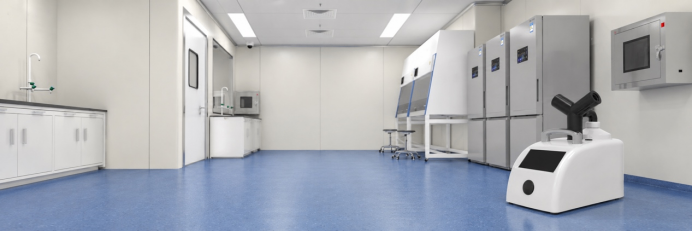
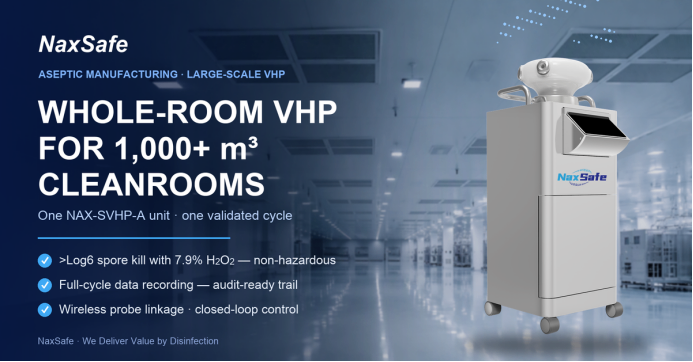
Room-scale decontamination. NaxSafe's SVHP series provides hydrogen peroxide vapor decontamination equipment for defined treatment spaces. Equipment selection and cycle development should reflect the application, room configuration and required process performance. Site-specific validation is needed to establish that the intended outcome can be achieved under the actual operating conditions.
NaxSafe's products are intended to support the implementation of a contamination control strategy. Product selection, process validation, treatment frequency and acceptance criteria should be established in the context of the user's facility, quality system and applicable requirements.
7. Conclusion
Effective mold control in pharmaceutical cleanrooms depends on understanding how contamination enters, where it can persist and whether existing controls are effective.
Routine cleaning and disinfection remain essential, but alcohol-based agents should not be treated as substitutes for sporicidal treatment. Periodic sporicidal use, validated disinfection procedures, environmental monitoring and appropriate investigation work together to support a stronger contamination control strategy.
VHP decontamination can provide an additional option when justified by risk assessment and validated for the intended space and process. It is not a universal replacement for surface disinfection or a substitute for correcting the source of contamination.
The central principle is to build a documented, risk-based program in which each control measure has a defined purpose, appropriate evidence and a clear place within the site's Contamination Control Strategy.
References
1.European Commission. EudraLex Volume 4, EU Guidelines for Good Manufacturing Practice, Annex 1: Manufacture of Sterile Medicinal Products (2022). Relevant sections include 4.10, 4.11 and 4.33–4.36.
2.U.S. Food and Drug Administration. Guidance for Industry: Sterile Drug Products Produced by Aseptic Processing — Current Good Manufacturing Practice (September 2004). See the section on disinfection efficacy.
3.EN 13697, Chemical disinfectants and antiseptics — Quantitative non-porous surface test for the evaluation of bactericidal and/or fungicidal activity. Refer to the applicable edition and test scope.
4.EN 13704, Chemical disinfectants and antiseptics — Quantitative suspension test for the evaluation of sporicidal activity of chemical disinfectants used in food, industrial, domestic and institutional areas. Confirm the applicable edition and scope before citing a product test claim.
5.NaxSafe product technical documentation, where applicable to the specific product and claim.
Regulatory interpretation and product suitability should be assessed against the applicable requirements, current standards and product-specific evidence. This article provides general technical information and does not replace site-specific risk assessment or validation.