
High Purity OEM Sterile Disinfectant for Biotech Facilities
Maintaining stringent microbial control in regulated environments requires a balance between aggressive sporicidal efficacy and the preservation of sensitive surface integrity. For facilities operating under strict pharmaceutical or biotech protocols, the residue left behind by traditional disinfectants can often become a secondary contamination risk or cause material degradation over time. This creates a critical need for high-purity, low-residue solutions that eliminate a broad spectrum of microorganisms without requiring extensive rinsing workflows.
The NAXSAFE™ Sporicide Series addresses these operational challenges by utilizing sterile-filtered, low-concentration hydrogen peroxide formulations. By focusing on volatile residues and material compatibility, these solutions support rapid microbial kill times—reducing bacterial spores, viruses, and fungi—while ensuring that surfaces are left clean and ready for immediate use. This approach is particularly vital for high-touch areas and equipment wipe-downs where operational efficiency cannot be sacrificed for hygiene.
Advanced Low-Concentration Hydrogen Peroxide Technology for Controlled Environments
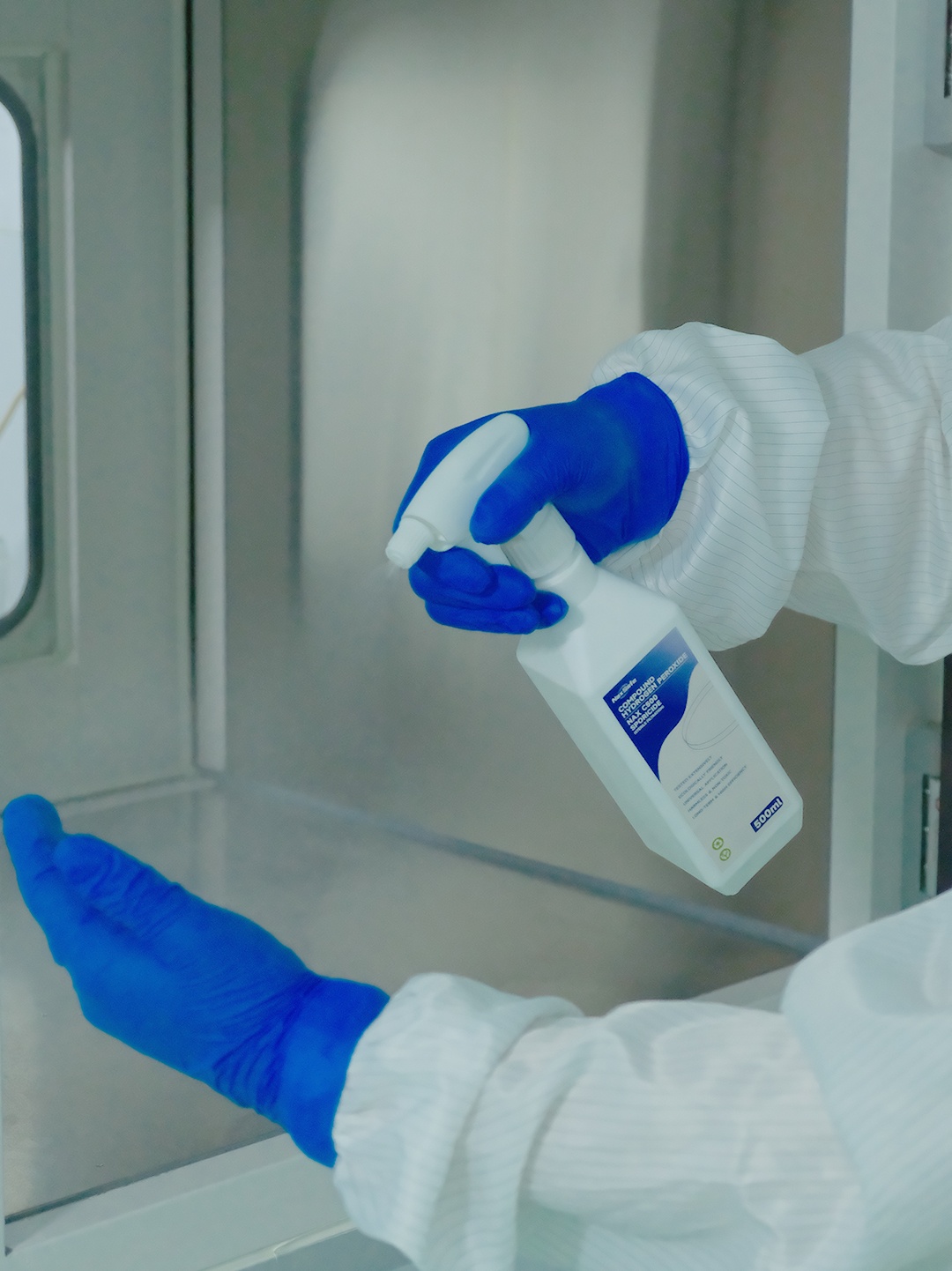
The core of the NAXSAFE™ Sporicide Series lies in its precise chemical formulation, utilizing hydrogen peroxide concentrations typically below 8%. Unlike high-concentration industrial agents that can be overly corrosive or hazardous to operators, this optimized range provides a high degree of sporicidal activity while significantly reducing the chemical burden on the environment. The volatility of these compounds ensures that after the disinfection process, the agents break down naturally into water and oxygen, leaving virtually no harmful residues.
Depending on the specific contamination profile of the facility, two primary formulation paths are available: pure hydrogen peroxide sporicides for the most sensitive applications and compound formulations combining hydrogen peroxide with peracetic acid for enhanced performance against resistant strains. This versatility allows facility managers to tailor their disinfection strategy based on the specific microbial risks present in their cleanrooms or laboratories.
Rapid Action: Engineered for high-velocity kill rates across a broad spectrum.
Environmental Safety: Eco-friendly decomposition prevents toxic buildup.
Material Integrity: Formulated to be non-irritating and exhibit very low corrosivity.
Operational Versatility through Sterile-Filtered Packaging and Delivery
In a sterile manufacturing environment, the container is as critical as the chemistry. If a disinfectant is contaminated during packaging, it becomes a vector for the very microbes it is meant to destroy. To mitigate this, the NAXSAFE™ line offers multiple sterile-filtered packaging configurations designed to fit into various contamination control workflows. This ensures that the disinfectant remains pure from the point of manufacture to the point of application.
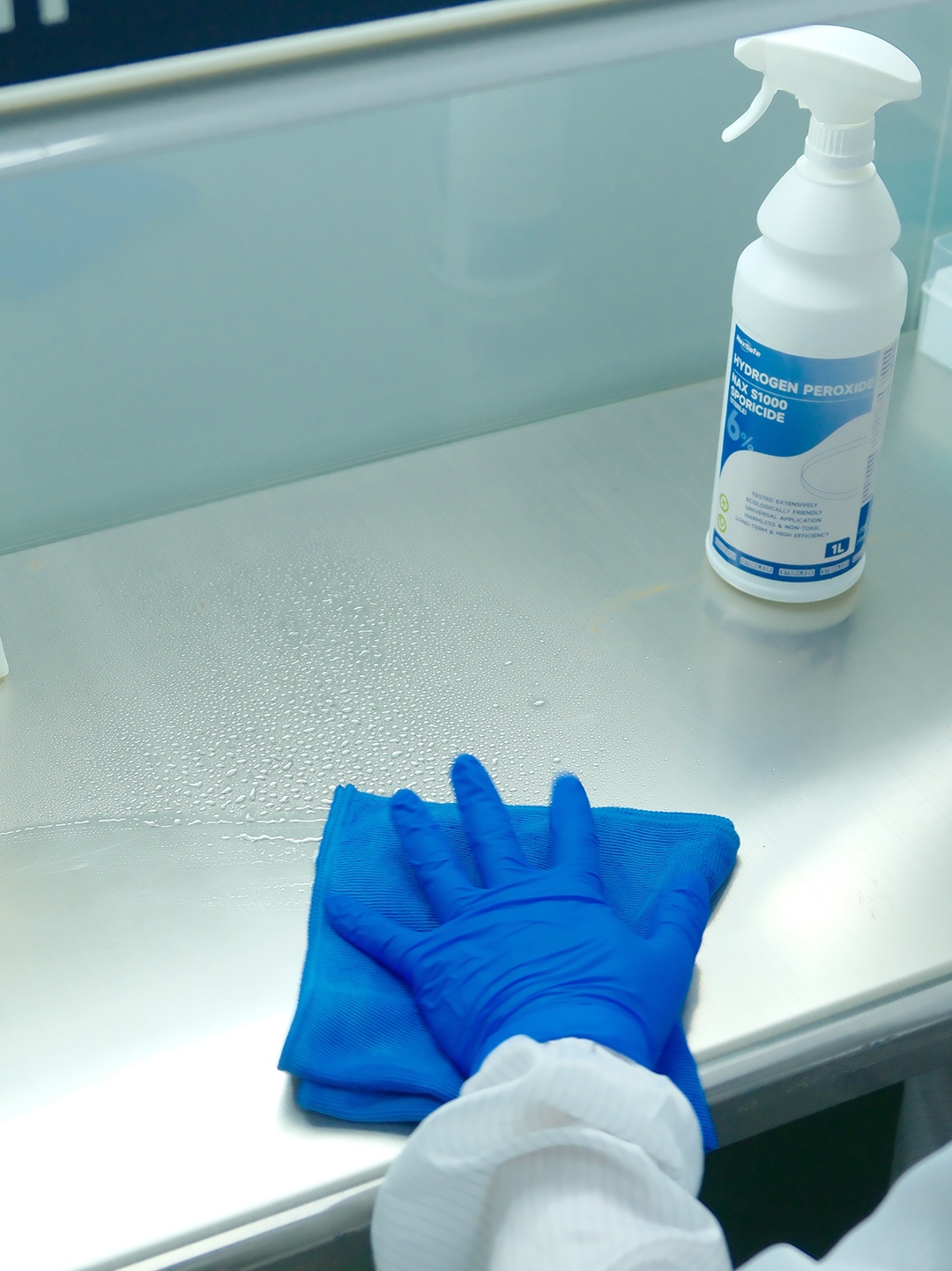
For routine surface wiping, 1L HDPE bottles with standard sprayers provide agility. However, for high-integrity zones, anti-backflow sprayer systems are employed to prevent environmental contaminants from entering the bottle during use. For large-scale facility sanitation, 25L drums provide a sustainable supply chain for bulk application. Some configurations even include sterilization by radiation, ensuring the highest possible purity levels for the most demanding biotech applications.
This range of formats supports different scales of operation, from the small-scale wipe-down of a biosafety cabinet to the comprehensive sanitation of a pharmaceutical production hall, ensuring that the method of delivery never compromises the sterile intent of the process.
Critical Application Scenarios in Pharmaceutical and Biotech Facilities
The application of an OEM Sterile Disinfectant must be strategically mapped to the facility's risk zones. In pharmaceutical production, the focus is often on equipment interiors and transfer area hygiene control. Because the Sporicide Series requires no rinsing, it is ideal for "wipe-and-dry" procedures on stainless steel surfaces, where air-drying naturally removes the volatile residue without leaving streaks or films that could interfere with subsequent production steps.
In laboratory and healthcare settings, specifically within biosafety laboratories, the priority shifts to high-touch, contamination-sensitive areas. The broad-spectrum efficacy—covering over 200 microorganisms—makes it a reliable choice for controlling vegetative bacteria, viruses, and fungi. The non-toxic nature of the residue ensures that researchers and technicians are not exposed to irritating fumes during routine environmental monitoring.
Furthermore, in hygienic food manufacturing, these solutions are used on processing surfaces and within packaging environments. The use of food-grade hydrogen peroxide as a core agent ensures that the sanitation process meets stringent safety requirements, protecting both the final product and the end consumer from microbial contamination.
Microbial Efficacy and Performance Specifications
| Target Microorganism | Kill Time (Typical) | Residue Profile | Rinse Requirement |
|---|---|---|---|
| Bacterial Spores | 3–5 Minutes | Volatile / Low | No - Air Dries |
| Vegetative Bacteria | 1 Minute | Volatile / Low | No - Air Dries |
| Enveloped Viruses | 1 Minute | Volatile / Low | No - Air Dries |
| Fungi and Mold | 2 Minutes | Volatile / Low | No - Air Dries |
| Broad Spectrum (>200) | Variable | Non-Toxic | No - Air Dries |
Evaluating Disinfectant Selection for Regulated Environments
When selecting a disinfection agent for a regulated facility, procurement managers and engineers must look beyond simple "kill claims." The true value of a sporicidal agent is found in its material compatibility data and its documentation readiness. An agent that kills spores quickly but corrodes 316L stainless steel over six months is a liability, not a solution. Therefore, verifying the corrosivity levels and the volatility of residues is paramount.
Another critical evaluation factor is the operational practicality. No-rinse workflows significantly reduce the time required for room turnover and decrease the volume of purified water needed for cleaning. By selecting a solution where residues are naturally volatile, facilities can optimize their labor costs and reduce the risk of human error during the rinsing phase.
Finally, the reliability of the supplier's sterile-filtration process must be audited. A disinfectant is only as sterile as its packaging. Ensuring that the supplier provides verifiable efficacy data and supports the specific contamination control workflow of the facility is the difference between a compliant operation and a regulatory failure.
Future Trends in Environmental Hygiene and Contamination Control
The industry is moving toward "smarter" disinfection—moving away from heavy chemical burdens toward targeted, high-efficacy agents that leave zero environmental footprint. The integration of vaporized hydrogen peroxide (VHP) for room decontamination and liquid sporicides for surface contact is becoming the gold standard in biotech and pharma. This hybrid approach ensures that both the air and the surfaces are maintained at a baseline of absolute cleanliness.
We are also seeing an increased demand for modularity in disinfection units, allowing facilities to adapt their hygiene programs as their production lines evolve. The shift toward food-grade, non-toxic agents reflects a broader global trend toward sustainability and operator safety, reducing the reliance on harsh alcohols or phenols that can cause respiratory irritation.
As regulatory bodies tighten the requirements for contamination control, the focus will likely shift toward real-time verification of disinfection efficacy. Solutions that provide clear, verifiable data on microbial kill times and residue profiles will become indispensable for facilities aiming for zero-defect production environments.
Common Technical Inquiries Regarding Sporicidal Solutions
What makes a disinfectant "low-residue" and why is it important?
Low-residue disinfectants, such as those based on hydrogen peroxide, break down into simple molecules like water and oxygen. This is critical in cleanrooms because leftover chemical residues can interfere with sensitive assays, corrode equipment, or contaminate pharmaceutical products.
Does the NAXSAFE™ Sporicide Series require a rinse step after application?
No, the formulations are designed to air-dry naturally. Because the residues are volatile and non-toxic, they evaporate without leaving a film, eliminating the need for a rinse step and streamlining the disinfection workflow.
How do you ensure the disinfectant itself is not a source of contamination?
We employ sterile-filtration during the formulation process and offer specialized packaging, including anti-backflow sprayers and radiation-sterilized configurations, to maintain the integrity of the product from manufacture to use.
What is the difference between pure H2O2 and compound peroxide formulations?
Pure hydrogen peroxide is ideal for extremely sensitive surfaces. Compound formulations, which include peracetic acid, are often used when a more aggressive attack on highly resistant bacterial spores is required, while still maintaining a low-residue profile.
Which surfaces are compatible with these sporicidal agents?
The series is designed for broad material compatibility, including most medical-grade stainless steels, plastics, and epoxy coatings. Detailed material compatibility data is available upon request to ensure suitability for specific facility surfaces.
How should I choose between the 1L bottle and the 25L drum options?
The 1L bottles are best for targeted wipe-downs and high-touch area hygiene. The 25L drums are intended for facilities with high-volume requirements, supporting bulk transfer into smaller dispensers or large-scale surface sanitation programs.
Technical References and Industry Standards
World Health Organization - Infection Prevention and Control
U.S. FDA - Guidelines for Pharmaceutical Cleanroom Sanitation
Ensuring the absolute sterility of a production environment is a continuous process of evaluation and refinement. By integrating high-efficacy, low-residue sporicidal solutions, facilities can achieve a superior level of contamination control while enhancing operational efficiency and safety.